SEAMEO QITEP in Science (SEAQIS) is a regional centre of the Southeast Asian Ministers of Education Organization, dedicated to improving the quality of science teachers and education personnel in 11 Southeast Asian countries.
Teachers and education personnel are expected to equip students with the competencies they need to become active citizens and workers in the 21st century. The key challenge is to strengthen the competencies that all teachers and education personnel need for effective teaching and learning.
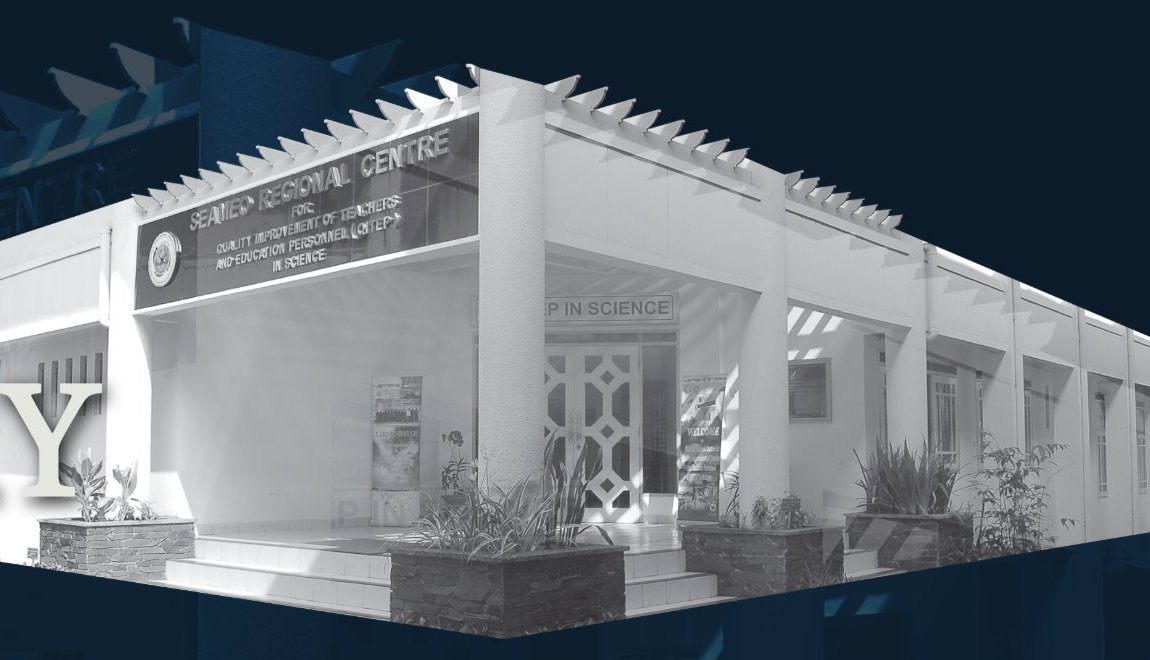
To meet this challenge, the Southeast Asian Ministers of Education Organization (SEAMEO) established the Regional Centre for Quality Improvement of Teachers and Education Personnel (QITEP) in Science in Bandung, Indonesia.
As part of a network of 26 SEAMEO Centres across Southeast Asia, SEAQIS focuses specifically on improving the quality of science education through training, research, publications, and international cooperation.
For more than a decade, SEAQIS has trained thousands of science teachers from 11 member countries and worked with UNESCO, ministries of education, universities, and industry to build a relevant, inclusive, and sustainable science learning ecosystem.
Our vision and mission guide SEAQIS in every programme, research project, and collaboration we undertake.
To be a Centre of Excellence in the professional development of science teachers and education personnel for sustainable development in Southeast Asia.
More than a decade of advancing science education across the region.
SEAMEO QITEP in Science was officially established in Bandung as the third of four QITEP centres in Southeast Asia, with a specific focus on science education.
A decade celebration with a major event that strengthened the network of training alumni from across Southeast Asia.
Launch of the KHD Award, which recognises the best science teachers in the region and is named after the Father of Indonesian Education.
A pivot to online learning during the pandemic: the launch of a Moodle LMS, a webinar series, and online publication of the SciEd Journal.
Launch of STEM programmes for early childhood education, computational thinking training, and an industry partnership with PHR Pertamina.
A strategic partnership with UNESCO on the 2027 Train-the-Trainers programme, development of the Science Simulations platform, and a new brand identity: "Dare to Innovate".
The leaders who guide the vision and operations of SEAQIS.
"SEAQIS is more than a training centre — we are a bridge between science education research and classroom practice. Dare to Innovate."
"Ensuring efficient operations and good governance so that SEAQIS programmes achieve the greatest possible impact across Southeast Asia."
"Driving our training curriculum, science education research, and every SEAQIS programme to make a real difference for science teachers in Southeast Asia."
The SEAQIS Governing Board comprises official representatives of the 11 SEAMEO member countries, who provide strategic direction for its regional programmes.
Acting Assistant Director / Head of The Science, Technology and Environment Partnership (STEP) Centre, Ministry of Education
Director of Teacher Training Department, Ministry of Education, Youth and Sport of Cambodia
Expert of Education Technology, Ministry of Education and Culture of Republic of Indonesia
Deputy Director General, Department of the Teacher Training, Ministry of Education and Sports Lao PDR
Director, Educational Planning and Research Division, Ministry of Education of Malaysia
Professor, Department of Chemistry, Yangon University
Regional Director, DepEd Region IV
Master Teacher, Standards and Research Branch, Academy of Singapore Teachers
President, The Institute for the Promotion of Teaching Science and Technology (IPST)
Science Teacher Trainer, National Commission for UNESCO Timor-Leste
President, National Academy of Education Management
Are you a teacher, researcher, educational institution, or industry partner who would like to contribute? SEAQIS welcomes all forms of collaboration that advance the regional science education ecosystem.