
A collection of 13 learning media titles built around storytelling and exploration, designed specifically for the modern classroom. Suitable for lessons across subjects, from primary to senior high school. All materials are currently in Bahasa Indonesia.
These titles are designed specifically for the interactive touchscreen TVs (interactive flat panels, IFPs) that the Indonesian government has provided to schools. They support multi-touch input, visibility from a distance and collaborative student interaction.
13 original SEAQIS learning media titles built around adventure and storytelling, designed for engaging, interactive classroom learning.
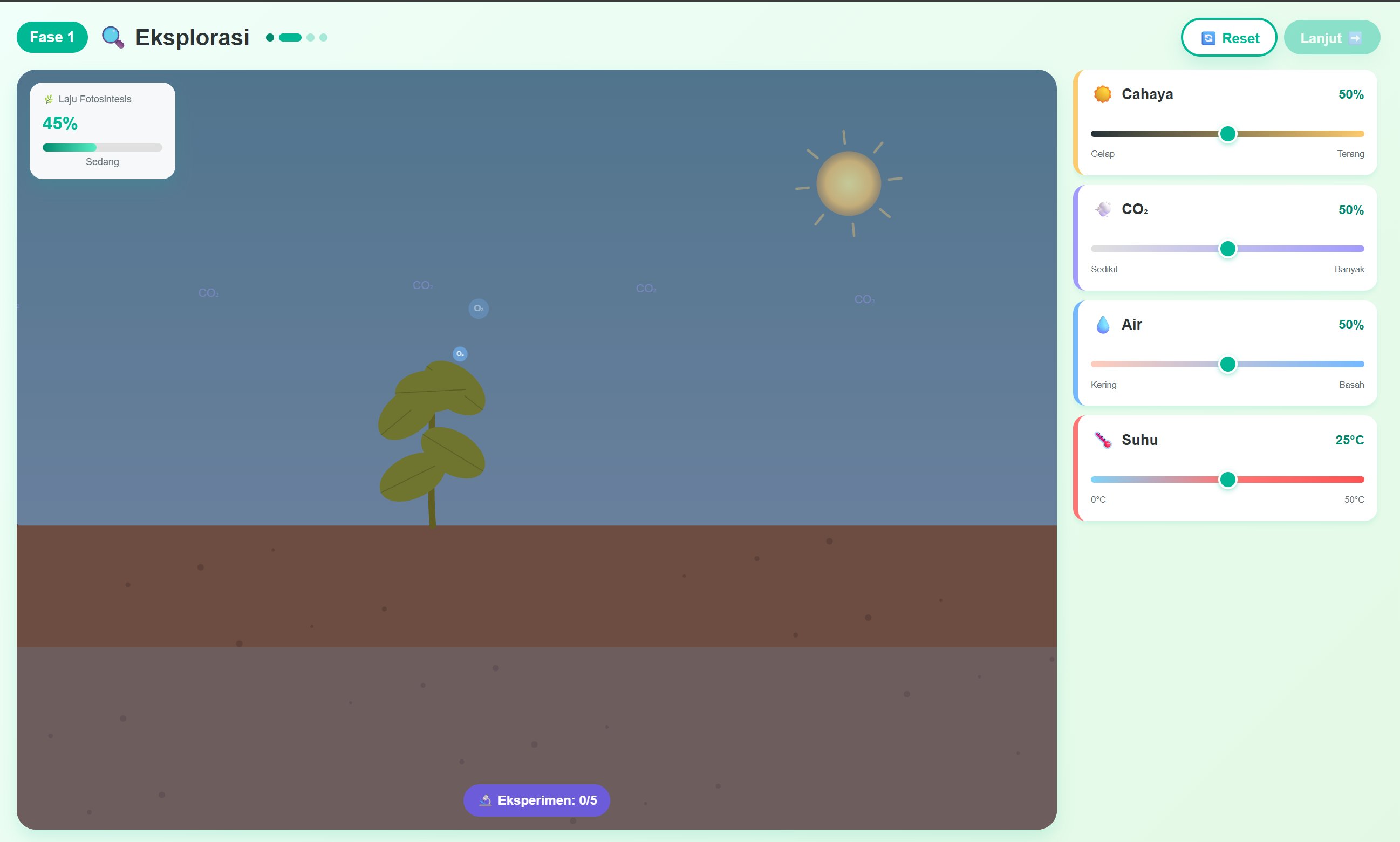
A four-stage simulation exploring the light and dark reactions, the roles of light, CO₂ and water, and the part chloroplasts play in plant photosynthesis.
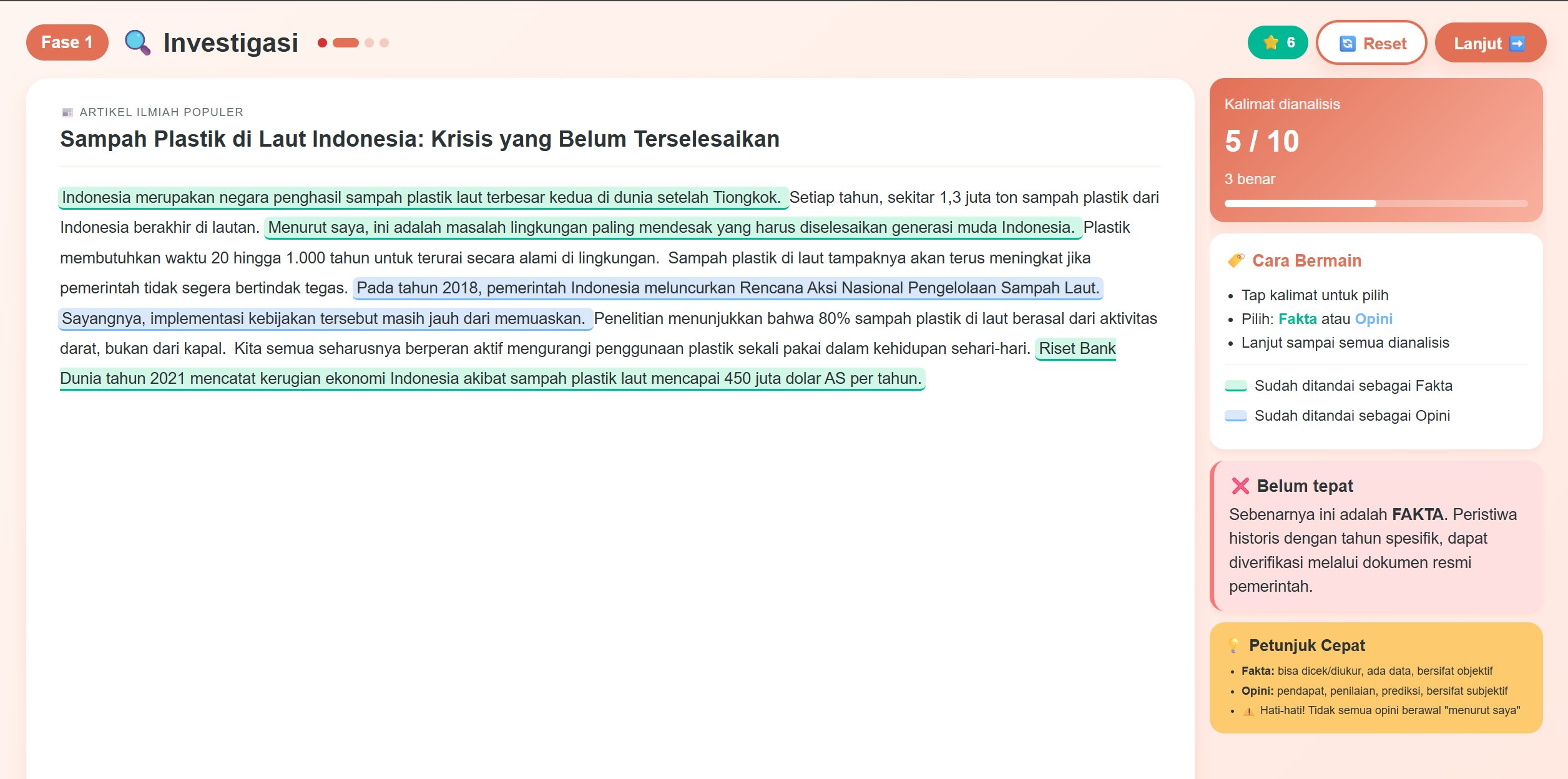
An interactive detective game in which students analyse news stories by sorting sentences into facts and opinions. Great for building students' critical thinking.
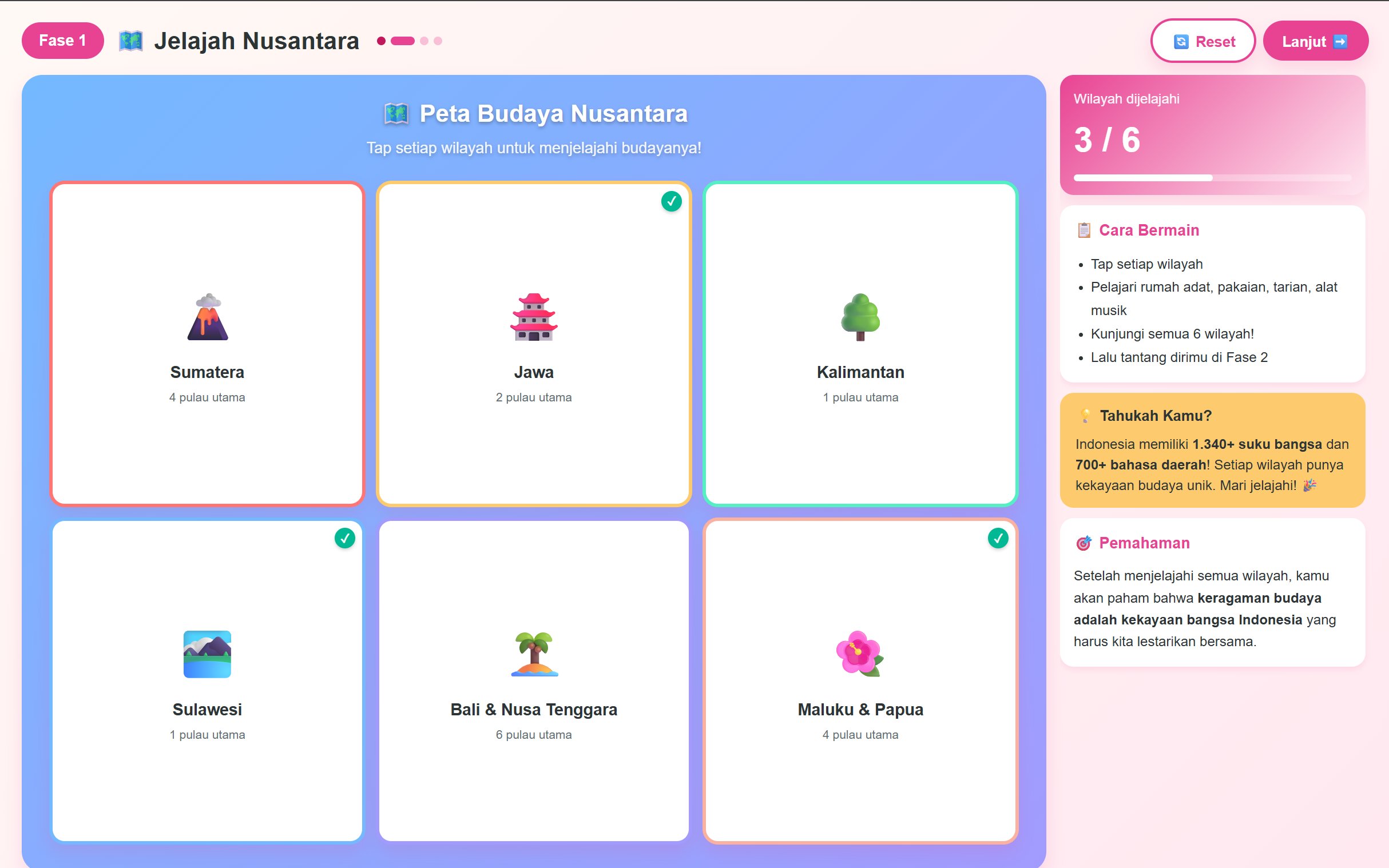
An interactive map of Indonesia for discovering the cultures of regions across the archipelago. Students learn about ethnic groups, languages, traditional houses and traditions through geographical exploration.
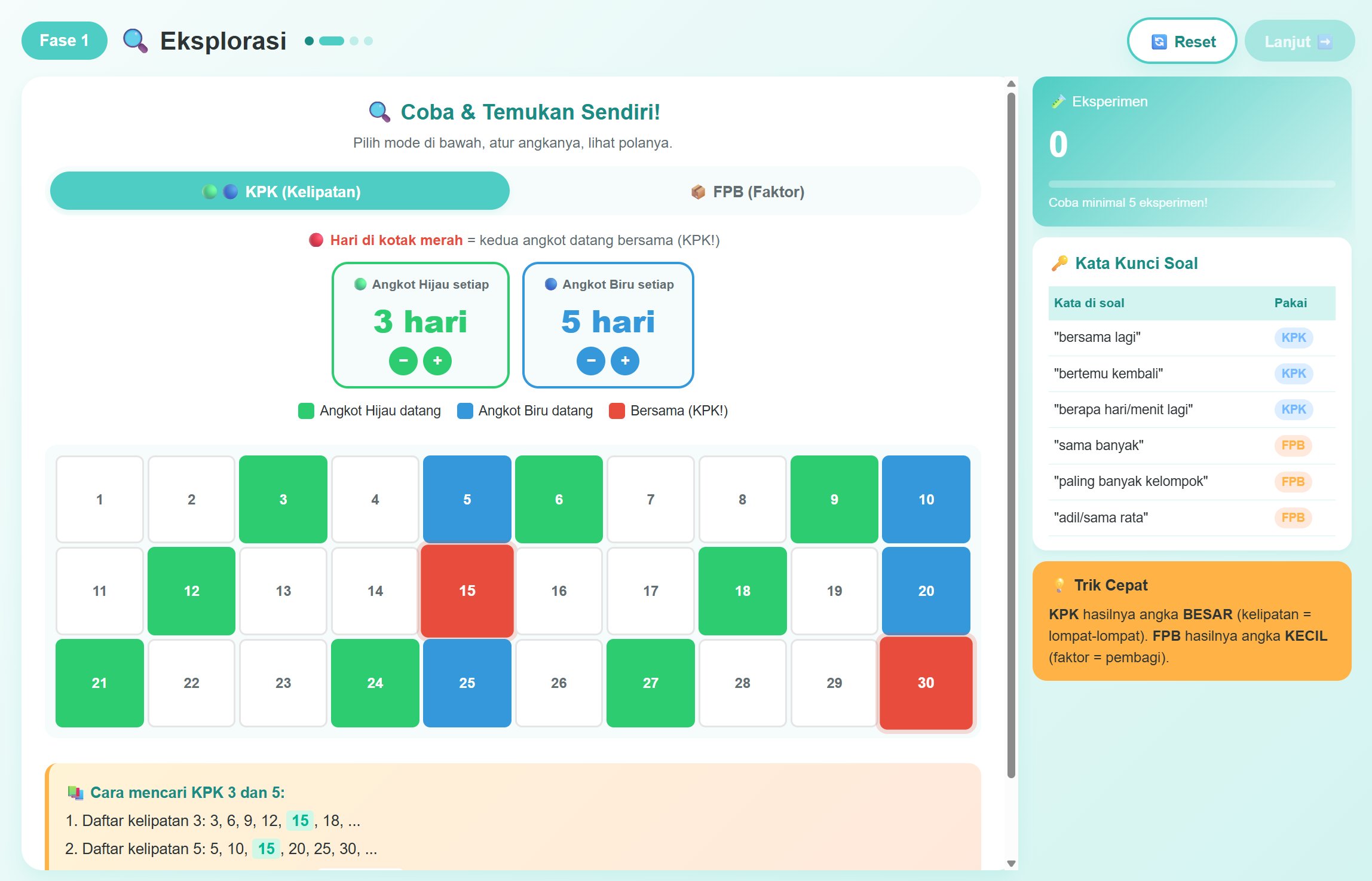
Everyday scenarios — minibuses (angkot) meeting up at a terminal (LCM) and sharing out gift parcels (HCF) — introduce these concepts to primary students through realistic mathematics.
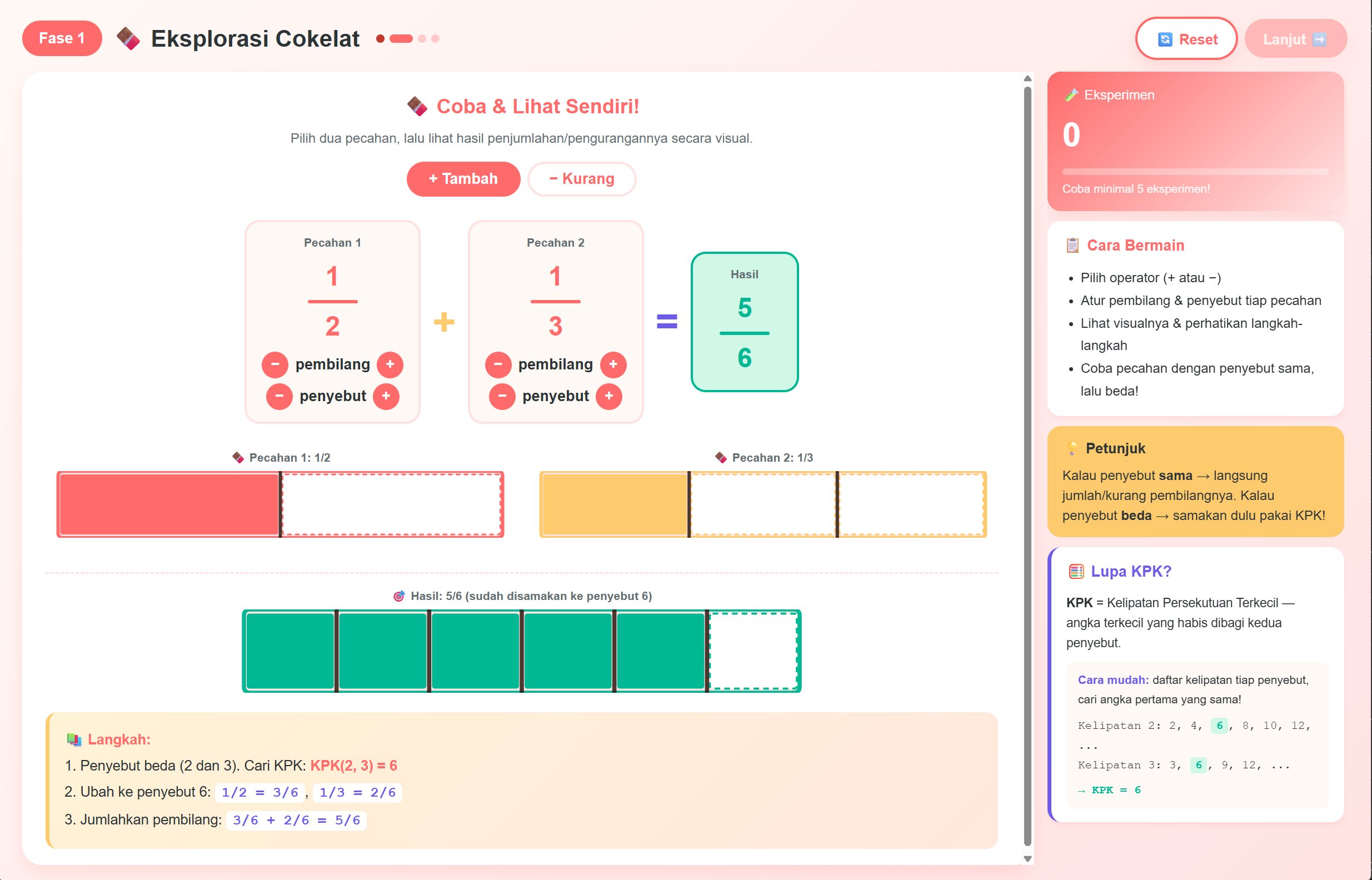
Fractions visualised with bar and circle models and everyday food and objects, to build a strong conceptual understanding.
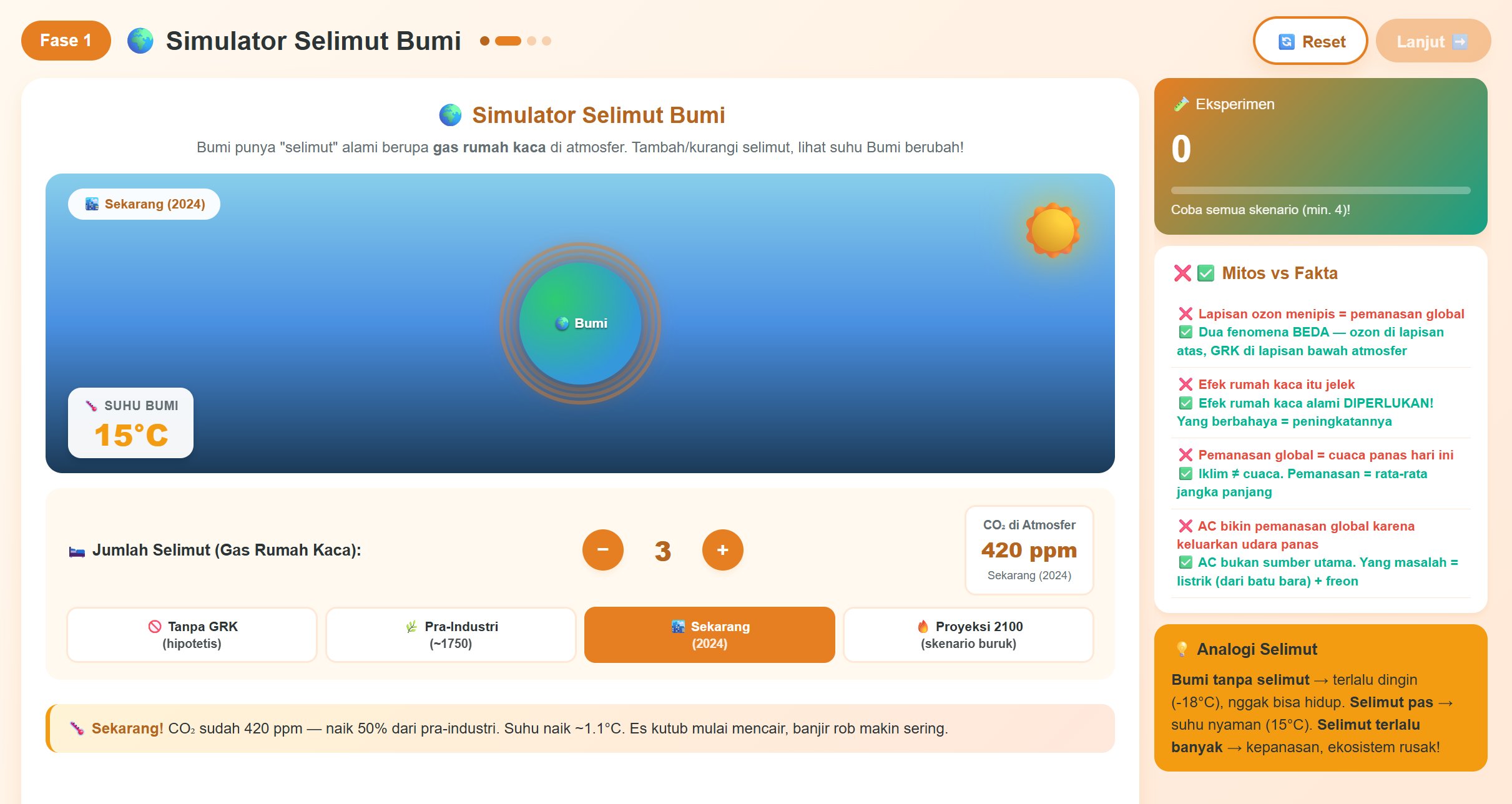
An "Earth's Blanket" simulator that uses the analogy of a thick blanket in the daytime to explain how greenhouse gases trap heat and the impacts of global warming.
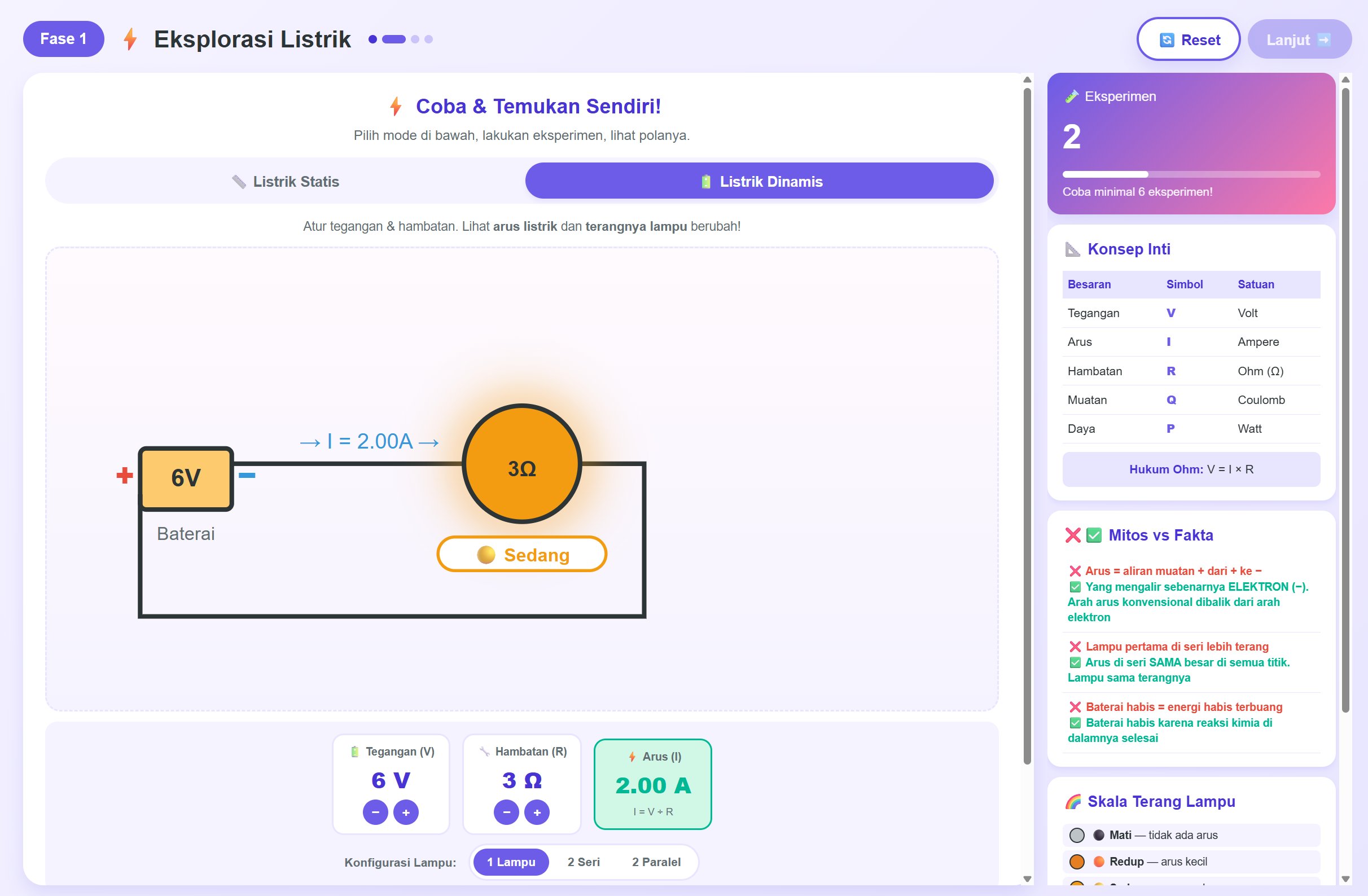
Explore current, voltage and resistance in series and parallel circuits. Students build their understanding of electricity visually and through experiments.
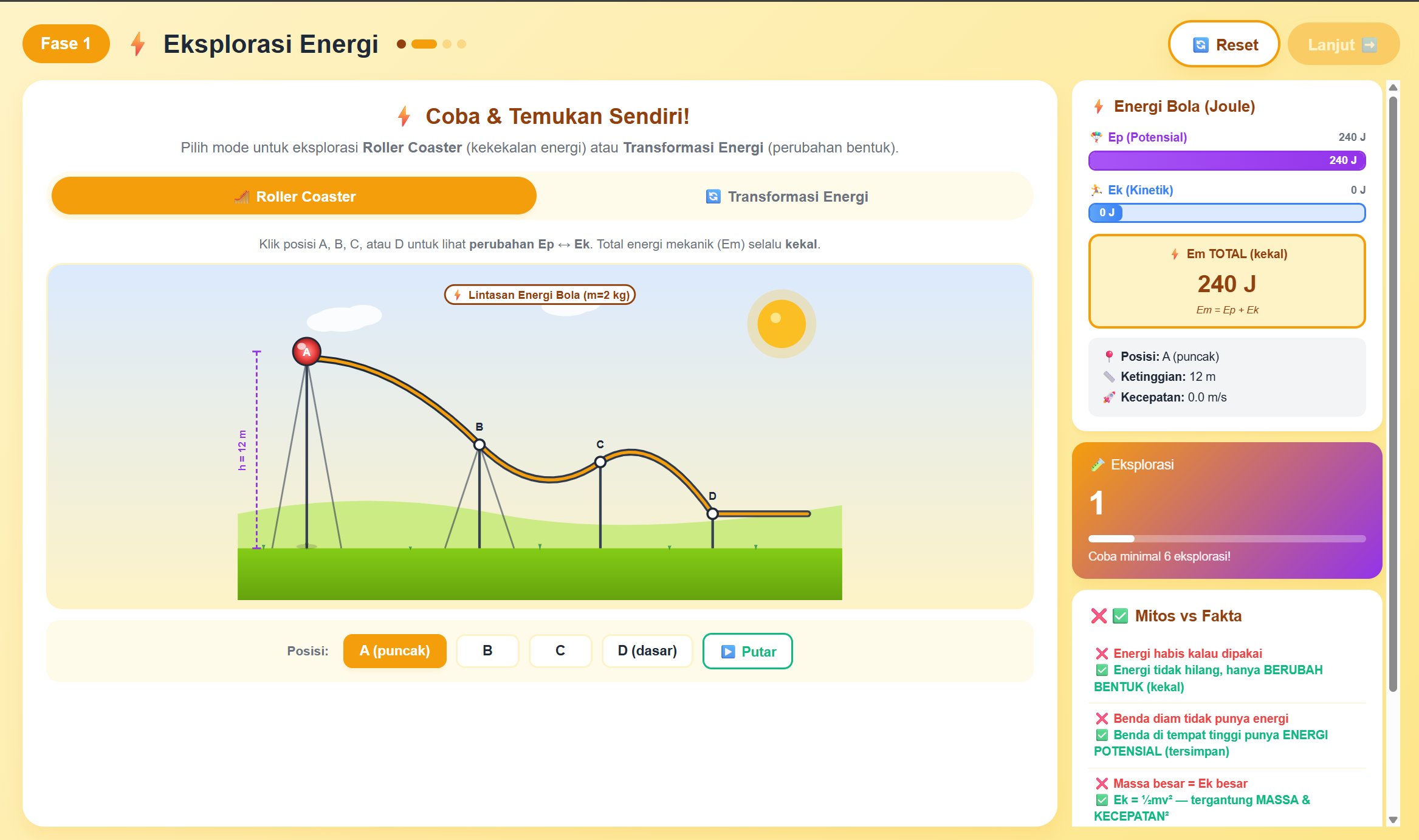
A roller-coaster simulator with real-time visualisation of Ep, Ek and Em, plus 8 everyday energy-transforming devices to explore, and case studies on the Saguling hydroelectric power plant and road safety.
An interactive exploration of the 3 states of matter (solid, liquid, gas) and 6 changes of state, through simulations set in everyday contexts.
A real-time animated solar system simulator with clickable planets. Students explore Earth's rotation and revolution, what causes day and night, the changing seasons and how eclipses happen.
Three interactive Indonesian ecosystems (rice field, tropical forest, ocean) with a food-chain builder, an energy-flow visualisation and a simulator showing the impact of species extinction.
Two integrated simulation modules: series and parallel circuits with a blown-bulb feature, and magnetic fields with a pulsing animation of field direction plus Faraday's induction experiment.
An interactive genetics simulation with a monohybrid Punnett square, 4 cross scenarios, a Mendelian probability simulator and an ABO blood group calculator.
Three principles that guide how we develop media for large interactive screens in schools.
Large UI elements (buttons, text, illustrations) that stay clearly visible from the back of the classroom. High colour contrast and typography that is easy to read on 65–86-inch screens.
Interactions are designed for direct touch — drag, tap, swipe — so several students can interact at the same time at the front of the class.
Not just one-way viewing. Every title makes room for class discussion, prediction and observation, and active participation by students gathered around the screen.
No complicated setup. Open the media directly in the browser on your school's interactive TV.
Filter by school level or subject, then pick the media that fits your lesson topic.
Open it in the browser on your classroom's interactive screen. The layout and element sizes adjust automatically to fit the screen.
Invite students up to the screen to interact directly. Discuss each stage, predict the outcomes and reflect on what they have understood.
Contact the SEAQIS team for training on using interactive screen media in your classroom, or suggest a new topic you would like to see developed into interactive media.